
Experiential Marketing Guide: Experiential Marketing Examples and Strategies

In a world where attention spans are shrinking and ad fatigue is rampant, how do you make your brand truly unforgettable? This is where an expert experiential marketing agency steps in. They transform passive advertising into active, memorable experiences that forge genuine connections. Instead of just showing your brand, they let people live it.
Brands today need more than just reach; they need resonance. Traditional advertising often falls short in today's crowded marketplace. This guide will show you how to move beyond simply telling people about your brand and instead, let them experience it firsthand. We'll explore what makes experiential marketing strategies so powerful, how to plan a winning campaign, and crucially, how to select the right [experiential marketing agency in India](https://www.cupshup.co.in/services/experiential-marketing-agency-india) to bring your vision to life.
Why Experiential Marketing Outperforms Traditional Advertising
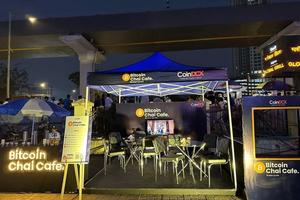
Traditional advertising talks *at* your audience. Experiential marketing lets them talk *with* your brand. This fundamental shift from passive consumption to active engagement creates a much stronger, more credible connection. It builds trust faster because people can directly interact with your product or service. Think about how CoinDCX used chai tapri pop-ups to explain cryptocurrency; that real-world interaction builds credibility far more effectively than any digital ad.
Furthermore, well-executed experiential campaigns generate authentic user-generated content (UGC). When people have a great experience, they share it on social media, extending your campaign's reach organically. This earned media is often more trusted than paid advertising. Experiential marketing also cuts through the digital clutter by winning attention in the physical world, a space many competitors have overlooked.
According to Nielsen (2023), consumers are 75% more likely to recall a brand after an experiential event compared to a digital ad. The ROI is also compelling: cost per on-ground impression in India can range from Rs. 5-15, significantly lower than traditional out-of-home advertising. For food and beverage brands, footfall-to-trial conversion rates at sampling activations can reach 60-80%.
The Power of Active Participation
Experiential marketing is about creating a tangible connection. It's the difference between seeing a picture of a delicious meal and tasting it yourself. This direct experience fosters deeper understanding and emotional connection with your brand. It transforms abstract brand messages into concrete, memorable moments.
7 Types of Experiential Marketing Formats
Experiential marketing is a broad category with many creative possibilities. The best format depends on your specific goals and target audience. Choosing the right format is key to a successful campaign.
Pop-up Experiences
These are short-run branded spaces in high-footfall locations like malls, metro stations, tech parks, and college fests. Pop-ups create urgency through scarcity: "here today, gone Sunday" drives visit intent that a permanent store never generates.
Brand Activations
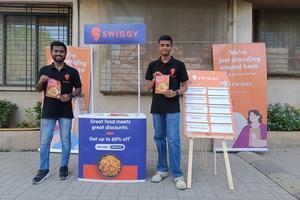
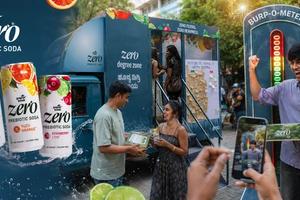
These are interactive set-ups at events, expos, or public spaces where the audience does something, samples a product, spins a wheel, or takes a branded photo. This is the backbone of Indian BTL marketing and works especially well for FMCG sampling, fintech education, and app downloads.
Immersive Installations
These are larger, design-heavy branded environments the audience walks through. Netflix's Red Notice heist simulator at Phoenix Palladium is a great Indian example, higher investment, but Instagrammability that money cannot buy in any other format.
On-ground Sampling and Street Marketing
This is product-in-hand, face-to-face interaction. It remains the fastest trial-conversion format for food, beverage, and personal-care brands in India. CupShup has executed sampling campaigns for 400+ brands across chai tapris, IT parks, RWAs, and college campuses.
Experiential Sponsorships and Event Integrations
These place your brand inside existing cultural moments, IPL fan parks, Sunburn brand zones, or wedding-season activations. You borrow an audience's existing excitement rather than building it from scratch.
Guerrilla and Stunt Marketing
This uses unconventional, high-surprise tactics in public spaces. The ratio of earned social reach to spend is the highest of any marketing format, but execution risk without a specialist agency is proportionally high. See CupShup's guerrilla marketing examples for a full breakdown.
Phygital and Hybrid Experiences
These are physical activations designed for Reels and Shorts amplification from day one, QR-triggered AR filters, live-streamed store openings, or creator-led pop-ups. Every on-ground moment needs a second life on short-form video, and phygital is the format that bridges both.
Planning Your Experiential Marketing Campaign: A 5-Step Framework
A well-executed experiential campaign looks effortless. The planning behind it is operationally complex. Here is the five-step framework CupShup uses on every brand brief.
Step 1: Define the Brand Moment, Not the Brand Message
Start with a feeling, not a feature. Write one sentence: "By the end of this activation, our audience will feel ____." Everything downstream, format, location, props, creator mix, flows from that sentence.
Step 2: Map Location to Audience Behavior
The cheapest mistake in experiential is putting the right activation in the wrong place. Where is your audience at 11 AM on a Saturday? Tech park food courts, CrossFit gyms, premium supermarkets, metro interchanges? Build a shortlist and physically visit each location before you commit.
Step 3: Design for Social Amplification from Day One
Every activation has two audiences, the 500 people who walk through, and the 500,000 who see the reel. Camera angles, creator briefs, UGC prompts, and hashtag strategy need to be planned before the set is built. If the activation is not shareable, you are leaving 80% of the reach unrealised.
Step 4: Plan Logistics, Permissions, and Contingencies
Municipal permissions, vendor contracts, staffing, weather contingencies, crowd management, power backup, insurance. This is the step where most in-house teams underestimate scope and where campaign costs overrun. An experienced brand activation agency with pre-negotiated vendor networks and city relationships moves 3x faster and at lower risk.
Step 5: Set Measurement Before You Set Up
Define success across reach, engagement, trial, and revenue, then wire up the tracking: footfall counters, UTM QR codes, creator-code attribution, post-event surveys. Measurement planned after the fact gives you stories, not data.
Measuring Experiential Marketing strategies ROI: The Four-Layer Framework
The four-layer framework CupShup uses to measure every campaign, and the benchmarks to set your targets against.
Layer 1: Reach and Footfall
Hard count of people the activation touched. Footfall counters or ticketing for enclosed spaces, manual counts and sampling logs for open activations. For earned reach: social mentions, hashtag volume, PR pickups, UGC posts in the first 72 hours.
Layer 2: Engagement Depth
Not everyone who walked past engaged. Measure dwell time, activation completions, QR scans, photo-ops, and email sign-ups. A 5-minute dwell with a QR scan is worth 50 times a 10-second walk-past.
Layer 3: Attribution to Trial and Conversion
Assign unique QR codes and UTM links to each activation location. Give each creator a unique promo code. Survey sampling recipients 7 days later to measure trial-to-repeat. Pixel-track activation landing pages for Meta and Google retargeting for 30 days. Piping these signals into marketing automation services closes the loop from footfall to conversion.
Layer 4: Brand Equity Lift
Run pre/post brand tracking on awareness, consideration, and purchase intent across activated versus control geographies. For multi-city campaigns, a 200-300 sample brand-tracking study run before and 4 weeks after the campaign gives you the CFO-level proof.
India 2026 benchmarks:
- Cost per on-ground impression: Rs. 5-15
- Footfall-to-trial conversion at sampling: 60-80%
- UGC generation rate at well-designed installations: 1 post per 8-12 visitors
- Earned media multiplier for well-executed stunts: 3-10x paid spend
AI in Experiential Marketing: The Future of Engagement
Artificial intelligence is rapidly transforming marketing, and experiential activations are no exception. AI can enhance every stage of an experiential campaign, from planning to execution and measurement. Imagine using AI to predict the optimal locations for pop-ups based on real-time demographic data or to personalize interactive elements within an installation based on a visitor's past behaviour.
AI-powered analytics can provide deeper insights into audience engagement, allowing for dynamic adjustments to the activation in real-time. Furthermore, AI tools can help in generating creative concepts or even automating aspects of content creation for social amplification. For brands looking to stay ahead, integrating [AI digital marketing](https://www.cupshup.co.in/services/ai-digital-marketing-agency) strategies into their experiential efforts is becoming essential. Working with an AI marketing agency lets brands turn this activation data into always-on optimisation, not one-off reporting.
Experiential Marketing in India: 3 Campaigns That Delivered
For more examples with full breakdowns, see the experiential marketing strategies examples blog. Three cases that show the ROI range:
McDonald's Drive Thru Rally
McDonald's needed to rebuild consumer trust in Drive-Thru post-COVID. Rather than claiming safety in an ad, they proved it live. 40+ biker influencers rode to four Drive-Thrus in a single day, placed real orders on camera, and live-streamed every step. The content was repurposed into reels and ads for months.
Result: 370% spike in Drive-Thru orders. 5 crore+ people reached in 48 hours.
Continental Malgudi - Pongal Activation
During Pongal and Sankranthi, Continental Malgudi activated kolam art, pot painting, and Pongal cooking workshops in Chennai and Bangalore through local creators.
Result: 1,000+ families engaged. 15M+ video views. 50M+ impressions.
Netflix - Red Notice Pop-Up
Netflix built a full heist simulator at Phoenix Palladium Mumbai, lasers, alarms, vaults, and branded merch to steal. Every visitor became a content creator.
Result: High footfall, strong social chatter, measurable spike in streams.
Wispr Flow Auto-Branding Activation
To launch 100 branded autos in Bangalore, Wispr Flow partnered with CupShup for a high-impact auto-branding activation. This created significant on-ground visibility and buzz in a key metropolitan area, demonstrating the power of integrating vehicles into a broader experiential strategy.
5 Signs Your Brand Needs an Experiential Marketing Agency
You can build a one-off activation in-house. Scaling it, measuring it, and making it work across cities is where most brands hit a wall. Here are five signs it is time to bring in a specialist:
- Your activations are generating photos but not leads. Great visuals with no conversion path means the activation was designed for Instagram, not the funnel. An experienced agency builds both simultaneously.
- You are spending more on logistics than on creative. Permits, vendor sourcing, and staffing coordination should not consume your marketing team's time. That is operational overhead, and a specialist agency absorbs it.
- Your campaign is not scaling beyond one city. A good idea does not automatically travel. City-to-city execution requires on-ground vendor networks, local knowledge, and a team that has navigated permissions in that specific municipality before.
- Your competitors are showing up in places you are not. RWAs, tech parks, college campuses, malls, and chai tapris are owned by agencies that have pre-negotiated access. Getting in from scratch for a single campaign is slower and more expensive.
- You cannot measure what your activations are producing. Anecdotal buzz is not a marketing KPI. If you cannot tell your CMO exactly how many trials, QR scans, or retargetable leads came from your last activation, the measurement infrastructure is missing.
How to Choose an Experiential Marketing Agency in India
Choosing the wrong agency costs more than the agency's fee, it costs you the campaign. Five criteria that separate genuine execution partners from pitch-deck specialists:
On-ground Track Record
Ask for documented case studies of campaigns that were physically built and executed, footfall numbers, logistics notes, client testimonials. Mood boards do not count.
City Network and Pre-negotiated Access
The best activations are hyperlocal. An agency with existing relationships in RWAs, tech parks, college campuses, and street-level venues moves faster, pays less, and avoids the permission delays that kill in-house campaigns.
Creator and Content Integration
Every activation needs a content plan before the first pole is planted. Ask how the agency briefs creators, plans camera angles, and captures UGC, if it is an afterthought, you will see it in the results.
Measurement Infrastructure
Agencies that can tell you exactly what an activation produced, footfall, scans, leads, brand lift, are the ones worth hiring. If the post-campaign report is just "it went well," find another agency.
Transparent Pricing and Deliverables
Experiential has many cost variables, permits, staffing, props, creator fees, logistics. An honest agency scopes all of this upfront. Hidden costs mid-campaign are a red flag.
Why CupShup
CupShup is India's leading experiential marketing agency, with 10+ years of on-ground execution across 300+ cities and 400+ brand clients including ICICI, McDonald's, Netflix, upGrad, and MX Player. What that means in practice: pre-negotiated access to thousands of activation venues across India, a vetted vendor network that has been stress-tested across 10,000+ campaigns, and a measurement system that gives brand teams real numbers, not just impressions.
We do not just plan activations. We execute them, measure them, and improve them campaign after campaign. Ready to explore how marketing automation services can complement your experiential efforts? Let's talk.
How AI Makes Experiential Marketing strategies Measurable
The old knock on experiential was that it could not be measured. An ai marketing agency approach changes that. AI now predicts which markets will convert, optimises promoter routing in real time, and ties every on-ground contact to an outcome, so experiential spend is as accountable as any digital line. As an AI marketing agency, CupShup builds this measurement layer into every campaign.
This is the shift the best experiential marketing agency partners have made: pairing on-ground creativity with an ai marketing agency layer and marketing automation services that capture and nurture every lead. The experience creates the moment; AI and automation prove it worked and scale the follow-up.
CupShup is an AI-led experiential marketing agency, on-ground muscle wired into an AI-led digital stack and the marketing automation services behind it, so every campaign is planned with intelligence and proven with real data.
Frequently Asked Questions
What does an experiential marketing partner do?
An experiential marketing strategies partner plans, builds, and executes real-world brand activations, pop-ups, sampling campaigns, immersive installations, guerrilla stunts, and phygital experiences. The best agencies handle everything from creative concept and permits to vendor management, creator briefing, live execution, and post-campaign measurement.
How much does an experiential marketing partner charge in India?
A single-city pop-up or sampling activation starts from Rs. 2-5 lakhs. A multi-city experiential campaign with creator integration and digital amplification typically ranges from Rs. 20 lakhs to several crores depending on scale, format, and duration. The relevant measure is cost per trial or cost per lead, experiential consistently delivers lower CPL than pure-digital for consideration-stage audiences.
What is the difference between a brand activation agency and an experiential marketing partner?
The terms overlap significantly. Brand activation agencies focus on on-ground product and service activations, sampling, demos, BTL. Experiential marketing agencies typically take a broader brief, immersive environments, large-scale installations, phygital experiences. CupShup operates across both as a full-service on-ground marketing partner.
How long does it take to plan and execute an experiential campaign?
A simple sampling or pop-up activation can be planned and executed in 3-4 weeks. A multi-city immersive campaign with custom installations typically needs 8-12 weeks of lead time for permitting, vendor sourcing, and creative build. Guerrilla campaigns can be turned around faster, in 2-3 weeks, but require an agency with existing city relationships to move that quickly.
How do you measure ROI for experiential marketing strategies?
Across four layers: reach and footfall, engagement depth (dwell time, QR scans, UGC), trial and conversion attribution (UTM links, promo codes, retargeting pixels), and brand equity lift (pre/post brand tracking). CupShup provides a full measurement report for every campaign with benchmarks against India-specific norms.
Key Takeaways
- Engagement marketing builds trust and recall by replacing passive advertising with active participation.
- Well-executed campaigns generate authentic UGC, extending reach and credibility.
- AI is increasingly important for enhancing planning, execution, and measurement in experiential marketing strategies.
- Choosing the right immersive brand experiences partner is crucial for scaling, measuring, and executing successful campaigns.
- Key factors in selecting an agency include track record, city network, measurement capabilities, and transparent pricing.
- Brand activation offers a strong ROI, with lower cost per impression and high trial conversion rates compared to traditional advertising.
Related Reading
- Wispr Flow auto-branding (Bangalore)
50 Integrated Marketing Campaign Ideas
The complete playbook with campaign frameworks, budget templates, and measurement guides for Indian brands.
Instant download + email copy. No spam, ever.
Experiential Marketing Resources & Services
Explore CupShup's experiential marketing expertise and guides.
Brand Activation Agency
Full-service experiential marketing across India
Brand Activation Services
End-to-end activation campaigns
BTL Marketing
Below-the-line marketing strategies
Experiential Marketing Guide 2025
Comprehensive guide to experiential marketing
Brand Activation Guide
Step-by-step brand activation playbook
MediBuddy Campaign
Health brand experiential activation case study
Explore CupShup Services
Brands that read this article also explored these services.
Experiential Marketing Agency India
Immersive brand experiences, pop-ups, product launches, live demos, and phygital events.
Learn more ActivationBrand Activation Services
On-ground engagement campaigns with tech-enabled tracking and verified results.
Learn more BrandBrand Strategy Services
Brand identity, positioning, and messaging frameworks built for competitive Indian markets.
Learn moreCuppa CS
Digital Marketing Expert specializing in AI-powered marketing tools and automation. Cuppa CS helps brands leverage cutting-edge technology to optimize their digital presence and drive customer engagement.
Related Stories
Go Deeper with Our Free Guides
Comprehensive, in-depth marketing guides created by CupShup's experts.
The Ultimate Guide to Experiential Marketing
A comprehensive guide covering experiential marketing from strategy to execution. Learn about event experiences, pop-ups, immersive experiences, retail activation, sensory marketing, gamification, community building, storytelling, production, staffing, amplification, and measurement. Includes 50+ term glossary and action plans.
Brand Ambassador Services India: Complete Guide & Pricing 2026
Complete guide to brand ambassador services in India. Proven strategies, real examples, and expert insights on recruitment, training, and deployment.
The Ultimate Guide to Brand Activation
A comprehensive guide covering brand activation from strategy to execution. Learn about experiential marketing, sampling campaigns, event marketing, pop-ups, retail activations, guerrilla marketing, production, staffing, measurement, and budgeting. Includes 50+ term glossary and action plans.