15 Experiential Marketing Examples You Can Implement Today [2026 Guide]
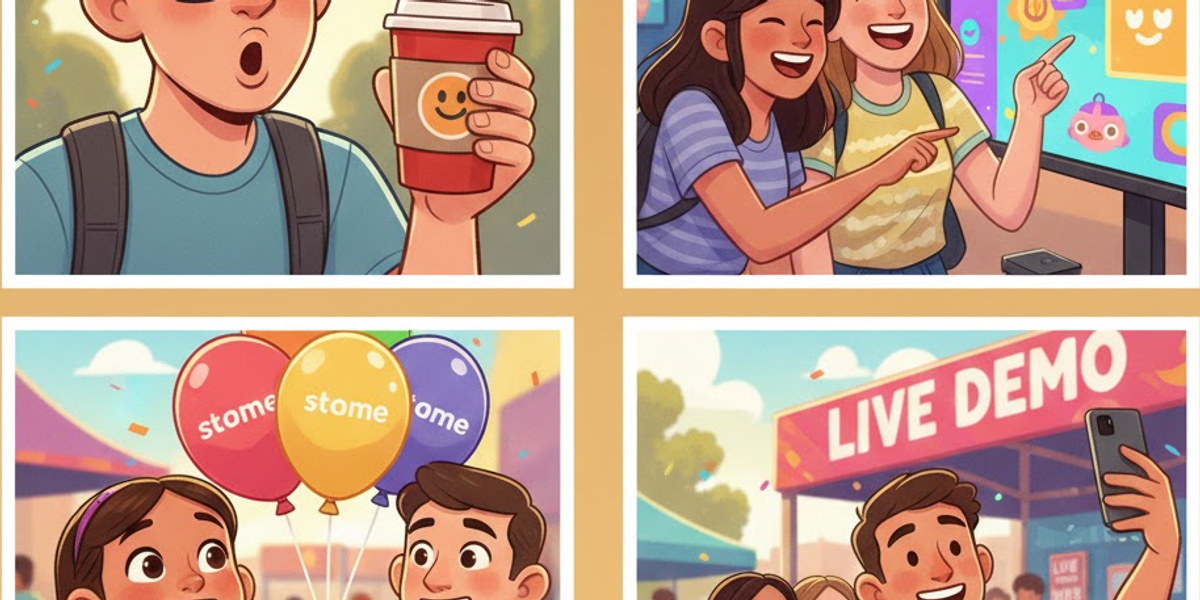
If there’s one thing marketing has taught us, it’s that people may forget your tagline, but they’ll never forget how your brand made them feel. That’s where Experiential marketing struts in, chai in hand, ready to turn brand interactions into brand love stories.
These 15 experiential marketing examples prove that the best brand moments aren't just creative—they're strategic. As an experiential marketing agency that's executed 10,000+ activations across India, CupShup knows what separates a viral moment from a forgettable one. Here's what works, why it works, and how your brand can do it too.
These experiential marketing examples aren't just impressive campaigns — they're templates you can adapt. Whether you're a FMCG giant or a D2C startup, each example below comes with a practical takeaway you can implement.
At CupShup, we often say, "If it doesn’t move people, it doesn’t move markets". Over time, our team has obsessed over how campaigns and Experiential events can trigger conversations and conversions in equal measure. And honestly, it’s not rocket science. It’s human science.
What Makes Experiential Marketing Work? The Science Behind It
So, what exactly is Experiential marketing?
Think of it as marketing that people live through, not just scroll past. It’s when brands invite consumers to play, explore, and feel something beyond a sales pitch.
Experiential marketing thrives on three words: see, touch, believe. Instead of telling people how awesome your product is, you let them taste it, test it, and maybe even dance with it.
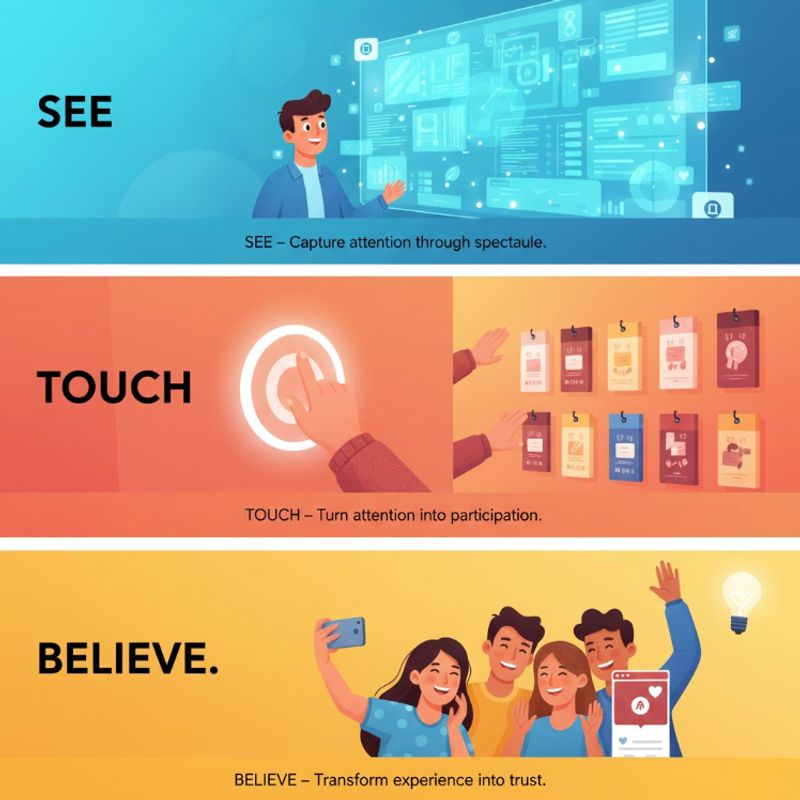
As we joke during brainstorming sessions, "If a campaign doesn’t make people take selfies or rethink life choices, did it even happen?"
It’s that immersive, sensory, and social aspect that makes Experiential marketing both memorable and measurable.
Why Experiential Marketing Works
There’s psychology behind the madness. When people engage multiple senses, their emotional connection deepens. The more they feel, the more they remember. That’s why brands like Red Bull, Zomato, and Swiggy keep playing in this playground because emotion, not exposure, drives loyalty.
A few key ingredients make Experiential campaigns pop:
- Immersion: Create a world people don’t want to leave.
- Interaction: Let them play, click, taste, or shout, just don’t bore them.
- Personalization: One-size-fits-all is so 2010. Use data smartly.
- Shareability: Because if it’s not on Instagram, did it really happen?
Maaz often says during ideation, "We’re not just designing activations; we’re designing brag-worthy moments". People love to share experiential events that make them look cool, curious, or clever, and brands get to ride that organic wave.
Best Experiential Marketing Examples From Global Brands
1. Cheetos Hands-Free House
At SXSW 2022, Cheetos teamed up with Amazon Ads to launch a voice-activated "hands-free" home. Everything was powered by Alexa. Guests controlled music, lights, and even games without lifting a finger. Smart, quirky, and 100% on-brand. It was Cheetos saying, "We get you. We know your cheesy fingers need a break". A brilliant example of creative Experiential marketing.

2. KitKat’s Wi-Fi-Free Zone
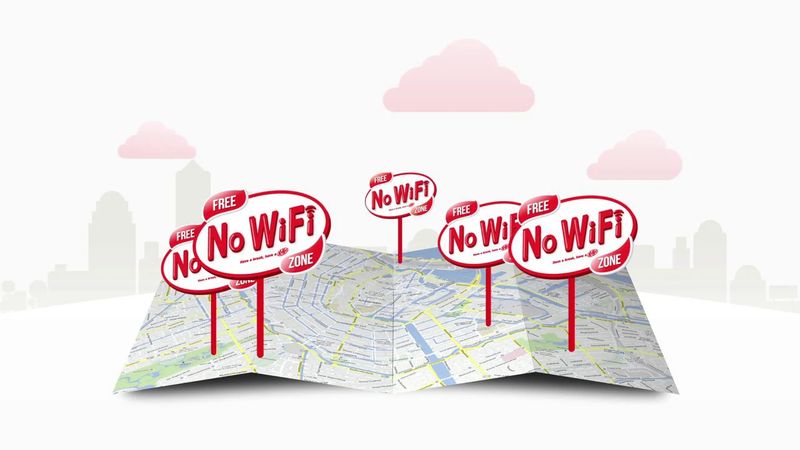
In a world addicted to notifications, KitKat gave people a literal break. Their Wi-Fi-free benches in Amsterdam blocked signals within a 5-meter radius, inviting people to unplug, chat, and chew. Simple idea, big impact. Sometimes the best way to connect is to disconnect. This stunt remains one of the most talked-about Guerrilla marketing examples that doubled as an Experiential event.
3. Pepsi Max Taste Challenge
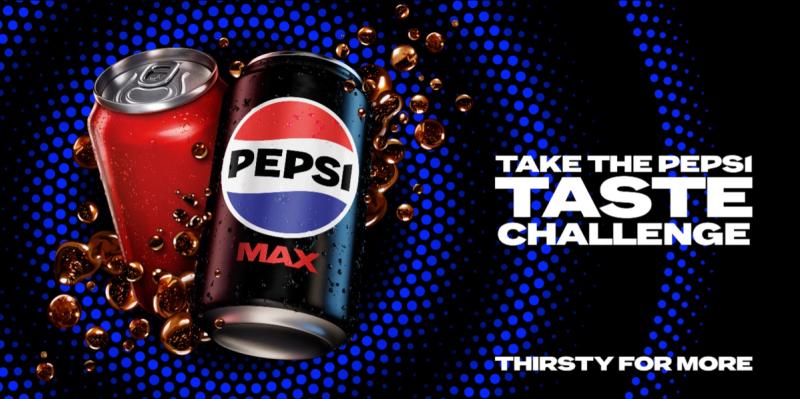
Pepsi revisited its iconic taste test with a modern twist that included live voting kiosks, social media prompts, and real-time results. It wasn’t just cola versus cola. It was participation versus perception, and the buzz it created was refreshingly bold. A true benchmark for Experiential marketing examples that deliver measurable impact.
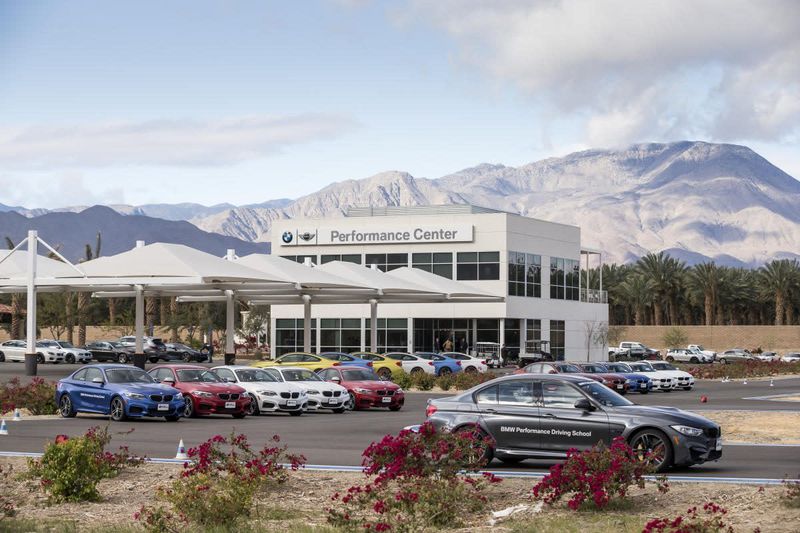
4. BMW Performance Center
BMW transformed car enthusiasm into a full-body experience. Guests raced on custom tracks, explored AR tech, and left with their adrenaline and brand love pumping. It proved that premium brands don’t just sell products, they sell belonging through Experiential events that make luxury feel personal.
Guerrilla Marketing Examples That Double as Experiential Events
Some of the best experiential marketing examples blur the line with guerrilla marketing. Think unexpected brand moments in public spaces — like Pepsi's bus shelter AR screen or KitKat's bench installations. These guerrilla marketing examples work because they combine surprise (the guerrilla element) with participation (the experiential element). The lesson: your next campaign doesn't need a massive venue. Sometimes the street corner is your best stage.
How to Implement These Brand Activation Examples for Your Brand
When we brainstorm campaign ideas, we always start with one question: Where does the human meet the brand? That intersection is where Experiential marketing campaigns are born.
Here’s how we can bring that alive in our own strategies:
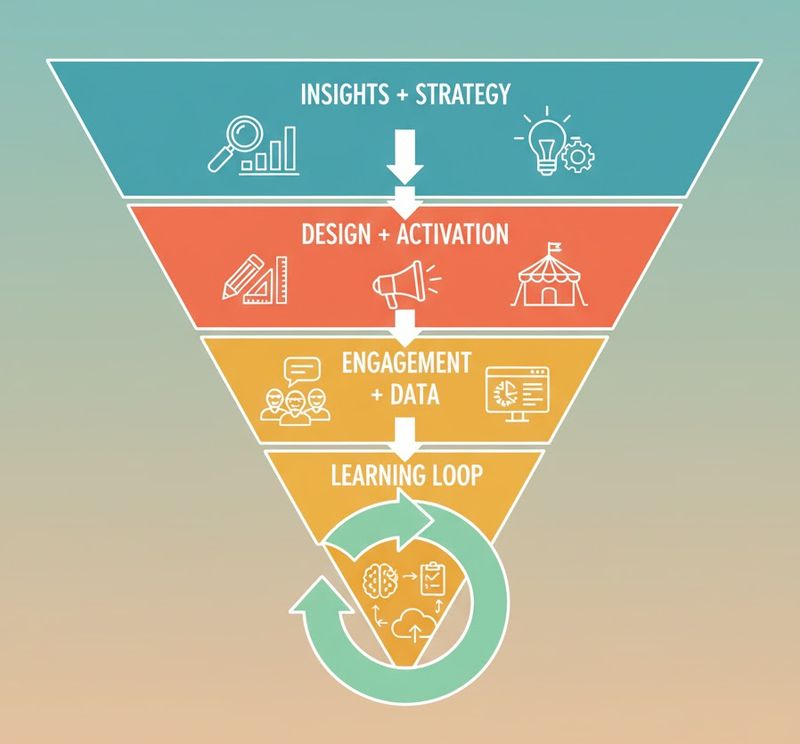
1. Align with the Customer Journey
Don’t drop an activation out of nowhere. Map it to real customer touchpoints like awareness, trial, purchase, and loyalty. If you can connect the dots between an event and a decision, you’ll connect with hearts and wallets alike. The best Experiential marketing examples often evolve directly from customer insight.
2. Set Clear Objectives
Sourav keeps reminding us, "What gets measured gets funded". Whether your goal is lead generation, awareness, or trial, define it early. Then build KPIs around participation, social engagement, and post-event sales lift. Every effective Experiential event starts with clear measurement goals.
3. Integrate Digital Tools
Experiential marketing isn’t limited to a physical space anymore. Add digital touchpoints like QR codes, AR filters, and live-streamed content. Sidharth once built a QR-based feedback loop for an event that doubled response rates, proof that tech and creativity are best friends, not frenemies.
Read next: Why Experiential Marketing Events Are Game Changers for Us, Cause Marketing: Campaigns That Balanced Heart and Commer..., and RWA Activation, Not A Thing Of Past.
Read next: Why Experiential Marketing Events Are Game Changers for Us, Cause Marketing: Campaigns That Balanced Heart and Commer..., and RWA Activation, Not A Thing Of Past.
4. Measure What Matters
Track attendance, dwell time, social mentions, conversions, and earned media value. Then dig deeper. Compare pre- and post-event sales, and analyze cost-per-lead. Data may not be sexy, but it’s what turns good Experiential campaigns into repeatable success stories.
5. Keep Iterating
Every event is a learning ground. Post-campaign retrospectives reveal which touchpoints spark joy and which sparked chaos. Refinement keeps your next activation sharper, smoother, and more aligned with audience behavior. Successful brands treat every Experiential event as an ongoing experiment.
Lessons from the Trenches
How CupShup Brings Experiential Marketing Ideas to Life
Inspired by these examples? CupShup has delivered similar high-impact activations for brands across FMCG, tech, finance, and entertainment. Our experiential marketing services cover ideation, venue sourcing, on-ground execution, live analytics, and post-campaign reporting. Every campaign is measured by real business outcomes—not just social media shares.
If there’s one thing we’ve learned, it’s that Experiential marketing fails when it tries too hard to sell. People can sense when they’re being hustled.
"They’ll forgive a little chaos but never a fake vibe".
Authenticity wins. When a campaign mirrors your brand’s true personality, its humor, its quirks, its purpose, it creates emotional stickiness.
Storytelling also plays a huge role. Imagine your activation as a movie scene: what’s the plot, who’s the hero, and what emotion do you want the audience to walk away with? Whether it’s a sustainability drive, a cultural festival, or a product trial, a strong narrative gives the experience meaning. The best Guerilla marketing examples also thrive on strong storytelling that connects brand purpose with public curiosity.
The Indian Angle on Experiential Events
Experiential marketing in India has its own masala. From Zomato’s witty offline installations to CoinDCX’s "Bitcoin Chai Cafe", Indian brands are blending hyperlocal insights with creative audacity. They understand the streets, the language, and the unspoken codes of connection.
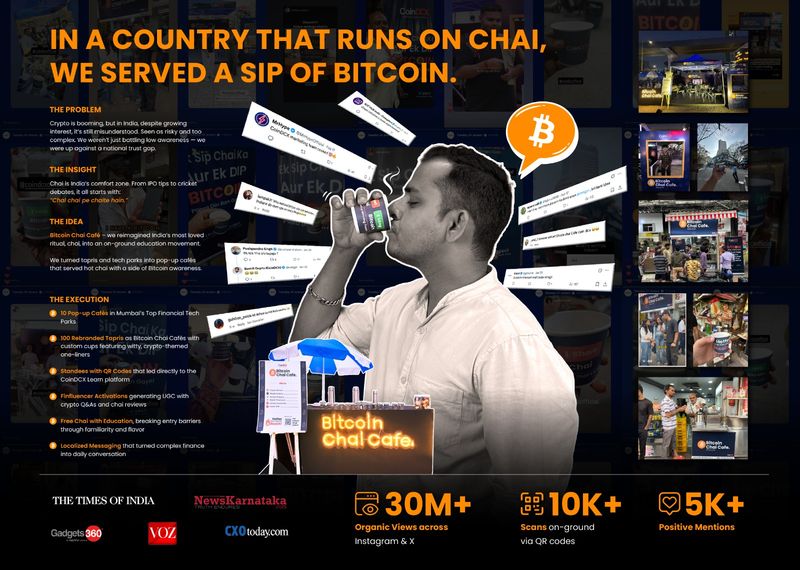
We’ve seen chai become a campaign mascot, traffic lights become ad spaces, and local slang become global statements. That’s not just innovation, it’s adaptation at its best. These Guerilla marketing examples from Indian brands prove that Experiential events can thrive on local flavor and authenticity.
Wrapping It Up
Experiential marketing isn’t about grand stages or massive budgets. It’s about human moments, those fleeting seconds when someone laughs, clicks, or connects with your brand. Whether it’s a pop-up cafe, an AR filter, or a heartfelt street activation, the principle stays the same: make them feel something real.
As marketers, we’re not just selling products anymore. We’re curating experiences that people carry home in their hearts and their phones. The brands that understand this will not just be seen, they’ll be remembered.
So the next time you plan a campaign, ask yourself: will people just attend it, or will they live it?
Connect with us on our instagram, or drop us a ‘hi’ at contact@cupshup.co.in
Whether you call them experiential marketing examples, brand activation examples, or guerrilla marketing examples — the principle is the same: make people feel something real.
Experiential Marketing FAQs
What are the best experiential marketing examples in India?
India has produced some standout experiential marketing examples in recent years. CoinDCX's Bitcoin Chai Café turned crypto into chai-time conversations at office pantries. McDonald's Drive Thru Rally activated 40+ bikers to showcase the drive-thru experience. ITC Sunfeast's Dump Truck campaign generated 10 lakh+ on-ground engagements. And CupShup's branded cup campaigns across 500+ cities remain one of the most scalable experiential formats in the country.
How do you plan an experiential event?
Start with one question: what do you want people to feel? Then work backward — choose a venue that matches your audience's daily routine, design an interaction that's shareable (photo-worthy + story-worthy), build in a digital capture mechanism (QR code, hashtag, AR filter), and plan your content amplification strategy before the event happens. The best experiential events are 50% planning, 50% execution.
Ready to Get Started? Talk to CupShup
Want to create experiential campaigns as impactful as these examples? CupShup designs custom activations based on your brand goals, target audience, and budget. Book a free strategy call with our experiential marketing team. Book a Free Strategy Call →
Experiential Marketing Campaign Planner
A step-by-step template to plan your next experiential campaign — includes ROI calculator and vendor checklist.
Instant download + email copy. No spam, ever.
Experiential Marketing Examples: FAQ
What are the most impactful experiential marketing examples in recent years?
The most impactful experiential marketing examples include Red Bull's Stratos space jump, Nike's interactive running experiences, and IKEA's sleepover events. In India, brands like Cadbury, Coca-Cola, and Swiggy have created immersive experiences at malls, RWAs, and public spaces that generate massive social media buzz and drive direct consumer engagement.
How does experiential marketing differ from traditional advertising?
Experiential marketing creates two-way, immersive brand interactions where consumers actively participate, unlike traditional advertising which is one-directional. It focuses on creating memorable moments through touch, taste, sight, and emotion. Studies show experiential campaigns generate 4x more brand recall than display ads and 74% of consumers say engaging with branded event marketing makes them more likely to purchase.
What makes an experiential marketing campaign successful?
Successful experiential marketing campaigns share key elements: a clear emotional hook, Instagram-worthy visual design, seamless integration with digital channels for amplification, measurable KPIs beyond just impressions, and a direct connection to the brand's core value proposition. The best campaigns also create shareable moments that generate earned media value far exceeding the campaign investment.
Related Experiential Marketing Resources
Learn more about how CupShup creates impactful experiential marketing campaigns for leading brands.
Brand Activation Agency
Full-service brand activation and experiential marketing
Experiential Marketing Guide
Complete guide to experiential marketing strategies
MediBuddy Health Activation
How experiential marketing drove health brand engagement
Kota Factory Campaign
Integrated experiential campaign for OTT platform
Explore CupShup Services
Brands that read this article also explored these services.
Experiential Marketing Agency India
Immersive brand experiences — pop-ups, product launches, live demos, and phygital events.
Learn more ActivationBrand Activation Services
On-ground engagement campaigns with tech-enabled tracking and verified results.
Learn more BrandBrand Strategy Services
Brand identity, positioning, and messaging frameworks built for competitive Indian markets.
Learn moreAakriti Mishra
Senior Marketing Strategist at CupShup with over 8 years of experience in brand activation and integrated marketing campaigns. Aakriti specializes in creating data-driven strategies that deliver measurable results for modern brands.
Related Stories

Go Deeper with Our Free Guides
Comprehensive, in-depth marketing guides created by CupShup's experts.
ATL and BTL Marketing: The Complete 2026 Guide for Indian Brands
Uncover the differences between ATL and BTL marketing. Learn which strategy drives better ROI for your brand in the evolving Indian market.
BTL Marketing: The Complete Guide to Below-the-Line Strategies in India
Practical below-the-line strategies and field examples tailored to the Indian market. Covers in-store activations, product sampling, retail engagement, and measurable ROI.